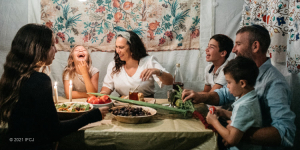
This week, my family and I join Jews around the world in celebrating Sukkot, the Feast of Tabernacles. Please enjoy this devotion centered on this joyous holiday that immediately follows the High Holy Days.

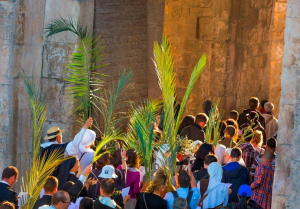
One of the highlights of the Sukkot synagogue service is known affectionately by Jewish children all over the world as “the lulav parade.” At this point in the service, worshippers take the four species mentioned in the Bible and circle the synagogue reciting special prayers and singing festive songs.
Living here in the Holy Land, I have the huge zechut, the huge honor and privilege to visit the Western Wall. My work often takes me to Jerusalem, and whenever I have some free time and I want to pray, I go straight to the Western Wall.
As I approach the Wall, I usually see this awe-inspiring view of the Temple Mount. I walk down the stairs from the Jewish Quarter of the Old City, and then there opening up before me is the plaza of the Western Wall with hundreds of Jews and Christian pilgrims praying there. If any of you have been to the Western Wall in the Old City of Jerusalem, you’ll know exactly what I’m talking about.
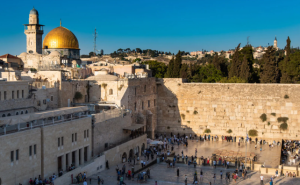
As I come down the stairs, I imagine in my mind’s eye how joyous my ancestors must have felt as they approached the Temple Mount when the Temple was still standing. We rightly think of the Temple as a place of prayer, but it was also a place of great rejoicing.
This joy in approaching the House of God is expressed so beautifully by the law of the Second Tithe that we find in this week’s Torah portion. Most people are familiar with the biblical tithes that were given to support the poor and the Levites who served the community. The Bible commands that after these tithes was given, a second tithe was to be separated but not to be given away: “You are to eat them [the tithes] in the presence of the LORD your God at the place the LORD your God will choose.”
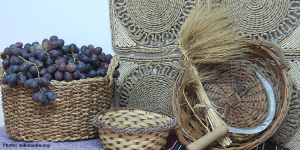
In practice, the second tithe was ten percent of produce raised by a farmer, or the monetary equivalent of that produce. Usually, the second tithe was used for “vacation” expenses at the time of the three pilgrimage festivals, when all of Israel would travel to Jerusalem to celebrate. As the verse states, the purpose was to honour God by rejoicing and enjoying the fruits of His blessings in the city that He has chosen.
God wants to see us happy, and we honour Him not only by worshiping Him, but by rejoicing in His presence and enjoying the blessings that He has given us.
So even if you can’t make it to Jerusalem and pray at the Western Wall, there is a beautiful teaching for everyone right here in this commandment. Give charity. Help the poor. Then set aside a second tithe to rejoice and enjoy God’s blessings.