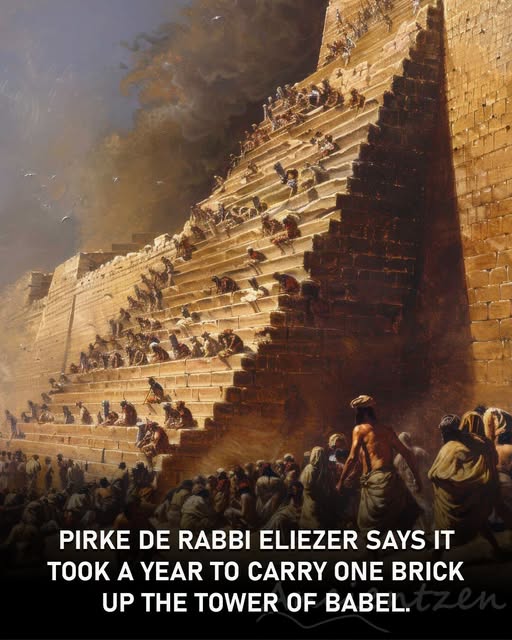
Pirke De Rabbi Eliezer, a Jewish text of rabbinic tradition, says that as the Tower of Babel rose, it took a whole year to carry a single brick to the top. The text then describes a scene that is hard to forget. If a man fell from the tower and died, no one paid attention. But if a brick fell, the builders sat down and wept, because it would take a year to replace it.
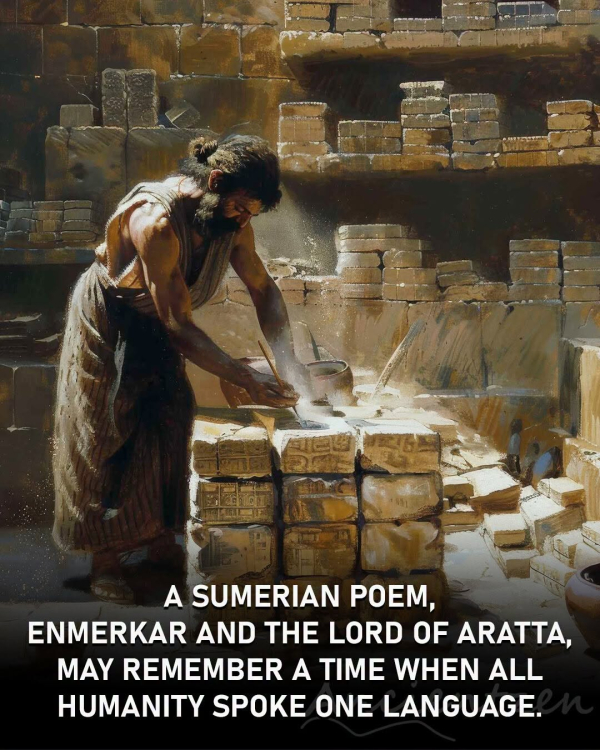
Genesis does not contain this detail. It tells the story in a few lines: the whole earth had one language, people settled on a plain in the land of Shinar, and they said to one another, come, let us make bricks and burn them thoroughly. It never says how tall the tower grew or how the work was organised. The picture of a year-long climb with a brick on the shoulder comes from later Jewish tradition, and it should be read as tradition, not as history.
Yet the image makes a pointed claim about what the project had become. A tower meant to keep the builders from being scattered had turned into something worth more than the builders themselves. The people carrying the bricks had become the cheapest part of the work.
That fits the motive Genesis gives. The builders said they wanted to make a name for themselves, lest they be scattered over the face of the whole earth. God had told humanity to fill the earth, and they built a tower to make sure they never would. The same text says Nimrod was the one who gave the command to build, so in that telling the fear of scattering was his before it was theirs.
Genesis ends the matter quietly. It says they left off building the city, and it never says the tower was struck down. The work was simply abandoned, half finished on the plain, and a life had come to count for less than a brick.