Isaiah 39 Click here for Bible Verses
Hi GAMErs!
Today’s passage is Isaiah 39. Let’s go!
Isaiah 39:1 (NIV)
1 At that time Merodach-Baladan son of Baladan king of Babylon sent Hezekiah letters and a gift, because he had heard of his illness and recovery.
On verse 1: “At that time” refers to the time when Hezekiah miraculously recovered from his life-threatening sickness. According to the New American Commentary, Merodach-Baladon II was ruler of Babylon until 703 B.C. when Assyria’s King Sennacherib ousted him from power. This, together with Isaiah 38:6, tells us that the events described in Isaiah 38 and here in Isaiah 39 happened before God delivered Jerusalem from Assyria in 701 B.C. But why would Isaiah order these events this way? Why talk about God delivering Jerusalem from Assyria first in Isaiah 36-37 and then flashback to the earlier events of Hezekiah’s recovery from illness and the Babylonians’ visit to Hezekiah in Isaiah 38 and 39? Scholars have posited many different theories, but the most important reason I believe is that Isaiah is trying to show that this Messiah that Isaiah 1-35 have been talking about is not Hezekiah but someone else. So rather than end on a note of tremendous victory for Hezekiah, Isaiah ends his account of Hezekiah’s life by talking about his weakness in Isaiah 38 as well as a major mistake that Hezekiah makes here in Isaiah 39. Let’s see what that mistake was.
Isaiah 39:2-7 (NIV)
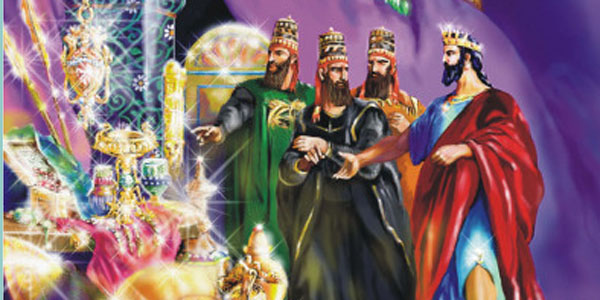
2 Hezekiah received the envoys gladly and showed them what was in his storehouses–the silver, the gold, the spices, the fine oil, his entire armory and everything found among his treasures. There was nothing in his palace or in all his kingdom that Hezekiah did not show them.
3 Then Isaiah the prophet went to King Hezekiah and asked, “What did those men say, and where did they come from?” “From a distant land,” Hezekiah replied. “They came to me from Babylon.”
4 The prophet asked, “What did they see in your palace?” “They saw everything in my palace,” Hezekiah said. “There is nothing among my treasures that I did not show them.”
5 Then Isaiah said to Hezekiah, “Hear the word of the LORD Almighty:
6 The time will surely come when everything in your palace, and all that your fathers have stored up until this day, will be carried off to Babylon. Nothing will be left, says the LORD.
7 And some of your descendants, your own flesh and blood who will be born to you, will be taken away, and they will become eunuchs in the palace of the king of Babylon.”
On verses 2-7: Thinking the Babylonians were his allies and friends, Hezekiah welcomes them when they come to him with a letter from the King of Babylon and gifts congratulating Hezekiah on his recovery. Without giving it much thought, Hezekiah shows the Babylonian messengers all of Judah’s national secrets: where Judah kept its treasury, weapons and supplies. The fact that Isaiah asks Hezekiah what the Babylonian messengers saw in his palace suggests that Hezekiah did not consult God before showing everything to the Babylonians. Isaiah says that this was a grave mistake, for the Babylonians would use these secrets to their advantage and one day take all of Judah’s treasures, and even some of Hezekiah’s own descendants, back with them to Babylon.
What can we learn from this?
– When we don’t pray and consult God about major decisions, we can end up missing God’s will completely.
– God doesn’t want you to expose all of your treasures to just anyone. As Jesus says, “Don’t feed your pearls to pigs.” We need to be discerning and wise about who we let into the most secret parts of our lives, because not everyone is to be trusted.
– When we are unwise with the resources God has given us, not only do we suffer, but even more those in our care who came after us will suffer. For God’s glory as well as for the benefit of us and those who come after us, let’s ask God for wisdom to know how best to manage, protect and multiply the treasures that God has entrusted to us.
Isaiah 39:8 (NIV)
8 “The word of the LORD you have spoken is good,” Hezekiah replied. For he thought, “There will be peace and security in my lifetime.”
On verse 8: When Isaiah tells Hezekiah that the Babylonians taking over Judah would not happen during his lifetime but after, Hezekiah gives a pious, spiritual sounding response, “The word of the LORD you have spoken is good”. Deep down, Hezekiah was thinking, “At least my own lifetime will be peaceful.” How wrong he would be. Remember that the events of Isaiah 39 came before the events of Isaiah 36-37. In other words, just a few years after Hezekiah says, “At least there will be peace and security in my lifetime”, Assyria would invade Judah, capture every city other than Jerusalem, and to take Jerusalem to the brink of extinction. Hezekiah should have humbled himself before God in light of his mistake and the news that his descendants would suffer at the hands of the Babylonians.
What can we learn from this?
– Don’t be so caught up in the tiny bubble of your peace and security that you have no heart or concern for others, including those coming after you.
– When we make a big mistake, rather than saying, “Oh well”, we need to humble ourselves, ask for God’s mercy and see what we can do to repair the damage we have done.
– The fact that Hezekiah would make this grave mistake and God would still deliver Hezekiah and Jerusalem from Assyria a couple years later shows us that:
(1) God faithfully keeps His promises even when we mess up.
(2) God is gracious and merciful, saving His people not because they deserve it or earned it, but because of His great compassion and mercy. His power is perfect in our weakness.
(3) God is the hero of our story, not us.
Father, thank You that You save me and deliver me not because I deserve it or earn it, but simply because You are a compassionate and gracious God. I pray that I would have wisdom to know how best to protect, use and multiply the treasures You’ve entrusted to me. In Jesus’ name, AMEN!