Leviticus 10:1-7 (CLICK HERE FOR BIBLE VERSES)
Hi GAMErs,
Today’s passage is Leviticus 10:1-7. With a humble heart, see what sticks out to you in this passage. Is there a verse, a phrase, or a lesson you think the Holy Spirit may be highlighting for you in this passage? After you’ve thought about the passage yourself a bit, read the GAME sharing below. Let’s go!
Leviticus 10:1-2 (NIV)
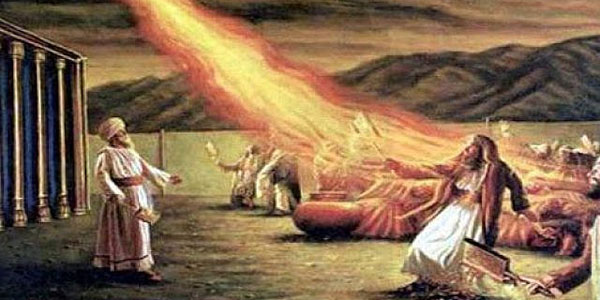
1 Aaron’s sons Nadab and Abihu took their censers, put fire in them and added incense; and they offered unauthorized fire before the LORD, contrary to his command.
2 So fire came out from the presence of the LORD and consumed them, and they died before the LORD.
On verses 1-2: In Leviticus 9, we saw that when the Israelites assembled together and collectively acknowledged their sin, and when Aaron the high priest painstakingly obeyed God in giving the required offerings and had a heart to bless the people, that’s when the glory of the Lord appeared to them all. Fire from God’s presence, representing God’s favour and blessing, consumed the offerings. In other words, what led to God powerfully showing up among His people was unity and humility on the part of the people, and obedience and a heart to bless on the part of the high priest. And when God showed up, the people rejoiced and fell down in worship.
Isn’t that the result every church leader wants? Don’t we all want God’s glory to show up and for everyone at church to rejoice and fall down in worship? But Leviticus 10 teaches us an important lesson: HOW you get there is important.
In Leviticus 10, Aaron’s sons Nadab and Abihu wanted to replicate that same awesome result. They wanted to see people rejoicing and falling down in worship just like they did in Leviticus 9. But instead of waiting for fire to come from God’s presence, Nadab and Abihu took a shortcut: they offered “unauthorized fire”. It could be that they tried to make the fire themselves. They may have thought, “What’s an easy way to get the people to rejoice? Let’s start another fire ourselves!” So they offered “unauthorized fire” — or man-made fire pretending it was fire from God — only to find that when they did, real fire from God came out and consumed them, killing them instantly. Obviously, by doing things their way instead of doing things God’s way, their plan “backfired”.
What’s the lesson here? Whenever we trust in ourselves and not in God, our plans will ultimately backfire. There are no shortcuts to experiencing the fire of God’s blessing, whether it’s in our own individual lives or as a church community. You can’t manufacture God’s blessing by taking shortcuts or playing tricks. Those things may produce a temporary “wow”, but the fire that is created will not last. As we learned in Leviticus 9, lasting fire from God will only come if God’s people are united, humble, willing to do things God’s way and wanting to bless, not just receive. Like Elijah’s opponents learned in 1 Kings 17, fire from God is not something we can produce on our own strength; it’s something we need to trust God for.
We can’t control how that fire will come, but we can make ourselves ready for that fire by surrendering our lives to God, repenting of sin, obeying God as best as we know how, staying united with our brothers and sisters in Christ, and waiting in His presence.
May we not settle for moral or spiritual shortcuts. Instead, may we take the time to do things the right way — humbling ourselves before God, surrendering our lives to Him, repenting of sin, and learning to worship Him for who He is. As we do, may God cause the offerings we give Him to truly catch fire.
Leviticus 10:3-7 (NIV)
3 Moses then said to Aaron, “This is what the LORD spoke of when he said: “‘Among those who approach me I will show myself holy; in the sight of all the people I will be honored.'” Aaron remained silent.
4 Moses summoned Mishael and Elzaphan, sons of Aaron’s uncle Uzziel, and said to them, “Come here; carry your cousins outside the camp, away from the front of the sanctuary.”
5 So they came and carried them, still in their tunics, outside the camp, as Moses ordered.
6 Then Moses said to Aaron and his sons Eleazar and Ithamar, “Do not let your hair become unkempt, and do not tear your clothes, or you will die and the LORD will be angry with the whole community. But your relatives, all the house of Israel, may mourn for those the LORD has destroyed by fire.
7 Do not leave the entrance to the Tent of Meeting or you will die, because the LORD’s anointing oil is on you.” So they did as Moses said.
On verses 3-7: In verses 6-7, in response to Nadab and Abihu’s unexpected deaths caused by their own lack of judgment, Moses gives Aaron (father of Nadab and Abihu) and his Aaron’s remaining sons some instructions that many of us may find shocking, even cruel. Moses says: “Do not let your hair become unkempt and do not tear your clothes” – in other words, do not do the things people traditionally do to mourn the loss of their loved ones – “or you will die and the Lord will be angry with the whole community. But your relatives, all the Israelites, may mourn for those the Lord has destroyed by fire. Do not leave the entrance to the tent of meeting or you will die, because the Lord’s anointing oil is on you.”
Why did Moses place such stern rules on Aaron after he had just lost his two sons? Why not let Aaron and his remaining sons mourn the loss of their loved ones right there and then? Does this mean that priests are not allowed even to mourn the death of their own loved ones?
God did not lack compassion for Aaron and his family (as we will see in tomorrow’s passage). Rather, in this case, something of national and historical importance was taking place: the ordination of Israel’s high priest and the launching of the priests’ ministry. This would not only impact all the Israelites then living at the time, but even more the ordination and launching of the priestly ministry would ultimately impact the entire world and every generation thereafter. Thus Moses gave those strict instructions to Aaron because a matter of such great national, world-wide and historical importance could not be put aside for a personal matter, no matter how tragic or difficult it was for Aaron the high priest. The priestly ministry had to go on. For the sake of all of Israel and every generation that came after them, Moses gave Aaron and his sons those stern instructions to finish and continue on with the ministry that had just been started.
What’s the lesson here? Especially as leaders, you may from time to time find yourself in a difficult position where you need to choose between attending to a personal matter versus attending to a matter that affects many more people. May God give you great wisdom to know how best to deal with those situations. Like Moses, may you take the course of action that will result in the most long-term benefit for everyone involved.
Heavenly Father, I pray that I would have the humility to do things Your way instead of my way and to trust that You will work things out in Your time, not mine. I pray for wisdom to make the right and wise decisions. In Jesus’ name, AMEN!
copyright © 2022 Justin Lim. All rights reserved.