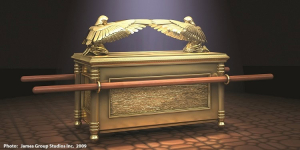
Have them make an ark of acacia wood—two and a half cubits long, a cubit and a half wide, and a cubit and a half high. — Exodus 25:10

Each week in synagogue, Jews read through the Torah from Genesis to Deuteronomy. The Torah portion for this week is Terumah, which means “contributions,” from Exodus 25:1–27:19.
When I was 15 years old and received my driving learner’s permit, my mother began to teach me how to drive. I’ll never forget how I got into the driver’s seat so excited and certain that driving would be a breeze. But as soon as I took my foot off the brake and the car lurched forward, I panicked and realized that I had a lot to learn before I’d be driving confidently. From that moment on, I listened intently to my mother’s guidance and followed her directions completely.
In this week’s Torah reading, we learn about the ritual vessels used in the Tabernacle. At first glance, it might seem like the details provided about the vessels are irrelevant to us today. However, everything in the Bible has an eternal message; sometimes we just have to look deeper to find it.
For example, Scripture gives the prescribed measurements of the Holy Ark: “two and a half cubits long, a cubit and a half wide, and a cubit and a half high.” If you notice, each measurement contains a partial unit—half of a whole. The Jewish sages explained that the Ark, which held the first Torah scrolls, was made out of “broken,” incomplete parts in order to teach us that in order to hold God’s Word, we, too, need to be “broken.”
Maimonides, the renowned 12th-century rabbi and physician, taught, “If a person sleeps in order to allow his mind to rest and to give rest to his body so that he should not become sick and unable to serve G-d because of illness, in this case his very sleep is service of G-d.”
It all depends on our intent. If we eat so that we can have energy to serve God, then our eating is in service to Him. If we exercise so that we have strength to serve God, then our exercise is in service to Him. If we rest so that we can serve Him with joy and strength, then resting, too, can be service to God.
Sometimes, we serve God by working hard at contributing to His purposes. And sometimes, the greatest thing that we can do for the glory of God is to do nothing at all.
Broken Without God
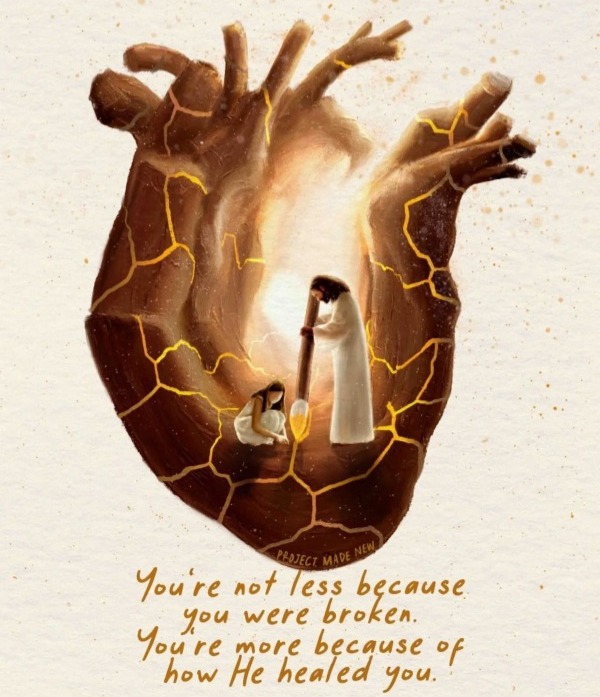
Think about it. Someone who is completely full of himself has no room for God. We need to be humble, to recognize that we are broken and incomplete without God, in order to receive His Word.
When I thought I was capable of driving before I even had my first lesson, I wasn’t nearly as receptive to my mother’s instructions as after I realized that I knew nothing about driving. In the same way, when we recognize that as human beings, we are naturally flawed and imperfect, we are far more receptive to God’s guidance and directives.
A great rabbi once said, “There is nothing as whole as a broken heart.” We need to embrace our brokenness and humbly acknowledge our shortcomings. In that way, we open a space for God so that He can enter our heart and complete our soul.