
Israel Institute of BS
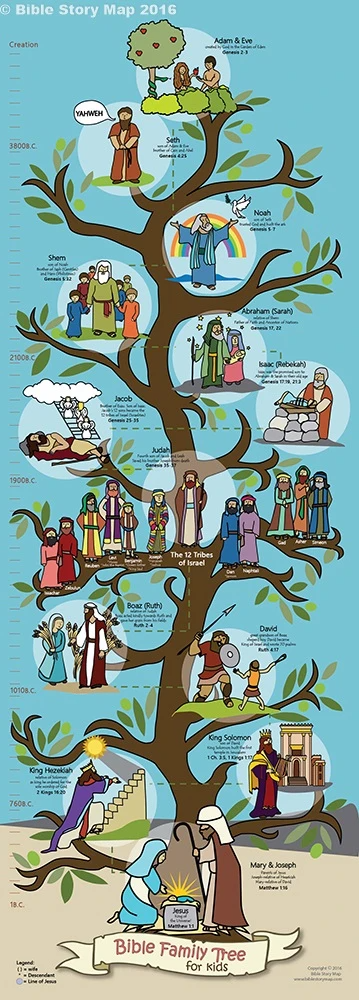
The Gospel of Matthew, the first Gospel of the New Testament, opens with the genealogy of Jesus. Matthew presents the names of this genealogy in three sets of fourteen generations each: “all the generations from Abraham to David fourteen generations, from David until the captivity in Babylon fourteen generations, and from the captivity in Babylon until the Christ fourteen generations” (Mat. 1:17). Fourteen seems a strange number: it has no significance in the Bible outside of this passage. So why fourteen?
The ancient Jewish interpretive method
The number fourteen is a clear example of gematria – a Jewish interpretive method that assigns numbers to each Hebrew letter. For example: The first Hebrew letter Aleph (א) equals 1, Dalet (ד), the fourth letter, equals 4, and Vav (ו) the sixth letter equals 6. Gematria calculates the numerical value of a particular word and then matches it with another word with the exact same numerical value, thus revealing a connection between them.
So, why fourteen?
Matthew builds his genealogy around the number 14 because David’s name in Hebrew (דוד) has a value of 14. ד (dalet) + ו (vav) + ד (dalet), or 4 + 6 + 4 = 14. Also, David is the fourteenth name listed in genealogy. The emphasis on David here is abundantly clear. Matthew uses the number fourteen to connect Jesus to King David, and thus presents his genealogy in a distinctively Jewish way.
Discover the Jewish background
Both genealogy and gematria were important to first century Jews, Therefore, it was very important to Matthew to use this number and make the connection between Jesus and David obvious.