by Henry Van Dyke
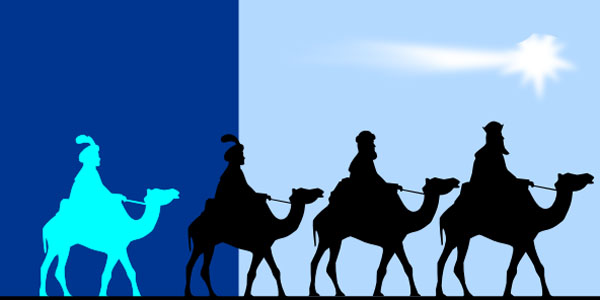
The other wise man’s name was Artaban. He was one of the Magi and he lived in Persia. He was a man of great wealth, great learning, and great faith. With his learned companions he had searched the scriptures as to the time that the Savior should be born. They knew that a new star would appear and it was agreed between them that Artaban would watch from Persia and the others would observe the sky from Babylon.
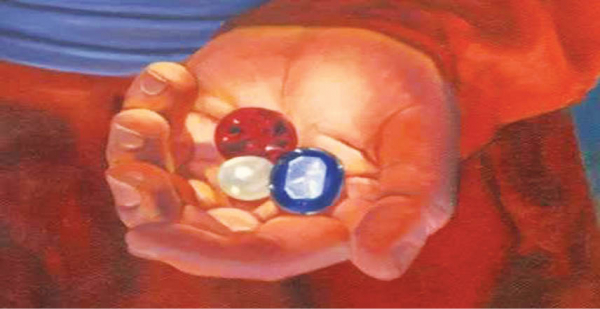
On the night he believed the sign was to be given, Artaban went out on this roof to watch the night sky. “If the star appears, they will wait for me ten days, then we will all set out for Jerusalem. I have made ready for the journey by selling all of my possessions and have bought three jewels–a sapphire, a ruby, and a pearl. I intend to present them as my tribute to the king.”

As he watched an azure spark was born out of the darkness, rounding itself with splendor into a crimson sphere. Artaban bowed his head. “It is the sign,” he said. “The King is coming, and I will go to meet him.”
The swiftest of Artaban’s horses had been waiting saddled and bridled in her stall, pawing the ground impatiently. She shared the eagerness of her master’s purpose.
As Artaban placed himself upon her back, he said, “God bless us both from falling and our souls from death.”
They began their journey. Each day his faithful horse measured off the allotted proportion of the distance, and at nightfall on the tenth day, they approached the outskirts of Babylon. In a little island of desert palm trees, Artaban’s horse scented difficulty and slackened her pace. Then she stood still, quivering in every muscle.
Artaban dismounted. The dim starlight revealed a man lying in the roadway. His skin bore the mark of a deadly fever. The chill of death was in his lean hand. As Artaban turned to go, a sigh came from the sick man’s lips.
Artaban felt sorry that he could not stay to minister to this dying stranger, but this was the hour toward which his entire life and been directed. He could not forfeit the reward of his years of study and faith to do a single deed of human mercy. But then, how could he leave his fellow man alone to die?
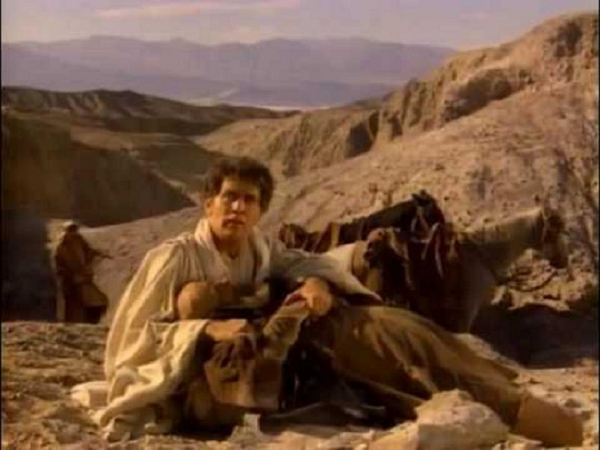
“God of truth and mercy,” prayed Artaban, “direct me in the path of wisdom which only thou knowest.” Then he knew that he could not go on. The Magi were physicians as well as astronomers. He took off his robe and began his work of healing. Several hours later the patient regained consciousness. Artaban gave him all that was left of his bread and wine. He left a potion of healing herbs and instructions for his care.
Though Artaban rode with the greatest haste the rest of the way, it was after dawn that he arrived at the designated meeting place. His friends were nowhere to be seen. Finally his eyes caught a piece of parchment arranged to attract his attention. It said, “We have waited till past midnight, and can delay no longer. We go to find the King. Follow us across the desert.”
Artaban sat down in despair and covered his face with his hands. “How can I cross the desert with no food and with a spent horse? I must return to Babylon, sell my sapphire and buy camels and provisions for the journey. I may never overtake my friends. Only the merciful God knows whether or not I shall lose my purpose because I tarried to show mercy.”
Several days later when Artaban arrived at Bethlehem, the streets were deserted. It was rumored that Herod was sending soldiers, presumably to enforce some new tax, and the men of the city had taken their flocks into the hills beyond his reach.
The door of one dwelling was open, and Artaban could hear a mother singing a lullaby to her child. He entered and introduced himself. The woman told him that it was now the third day since the three wise men had appeared in Bethlehem. They had found Joseph and Mary and the young child, and had laid their gifts at His feet. Then they had gone as mysteriously as they had come. Joseph had taken his wife and babe that same night and had secretly fled. It was whispered that they were going far away into Egypt.
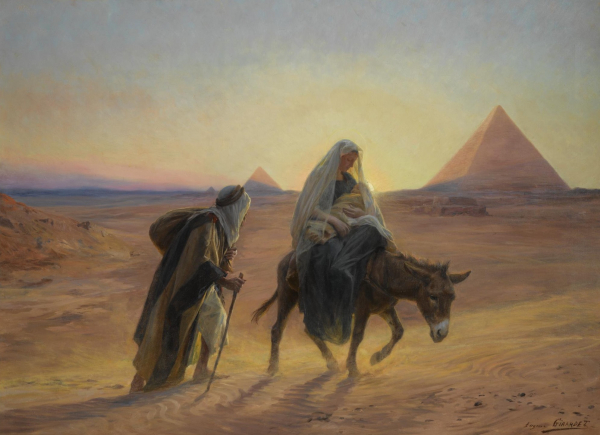
As Artaban listened, the baby reached up its dimpled hand and touched his cheek and smiled. His heart warmed at the touch. Then suddenly, outside there arose a wild confusion of sounds. Women were shrieking. Then a desperate cry was heard, “The soldiers of Herod are killing the children.”
Artaban went to the doorway. A band of soldiers came hurrying down the street. The captain approached the door to thrust Artaban aside, but Artaban did not stir. His face was as calm as though he were still watching the stars. Finally his out-stretched hand revealed the giant ruby. He said, “I am waiting to give this jewel to the prudent captain who will go on his way and leave this house alone.”
The captain, amazed at the splendor of the gem, took it and said to his men, “March on, there are no children here.”
Then Artaban prayed, “Oh, God, forgive me my sin, I have spent for men that which was meant for God. Shall I ever be worthy to see the face of the King?”
But the voice of the woman, weeping for joy in the shadows behind him said softly, “Thou hast saved the life of my little one. May the Lord bless thee and keep thee and give thee peace.”
Artaban, still following the King, went on into Egypt seeking everywhere for traces of the little family that had fled before him. For many years we follow Artaban in his search. We see him at the pyramids. We see him in Alexandria taking counsel with a Hebrew rabbi who told him to seek the King not among the rich but among the poor.
He passed through countries where famine lay heavy upon the land, and the poor were crying for bread. He made his dwelling in plague-stricken cities. He visited the oppressed and the afflicted in prisons. He searched the crowded slave-markets. Though he found no one to worship, he found many to serve. As the years passed he fed the hungry, clothed the naked, healed the sick and comforted the captive.
Thirty-three years had now passed away since Artaban began his search. His hair was white as snow. He knew his life’s end was near, but he was still desperate with hope that he would find the King. He had come for the last time to Jerusalem.
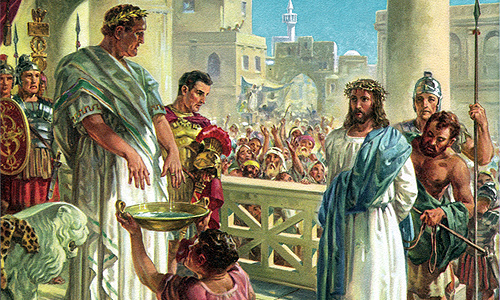
It was the season of the Passover and the city was thronged with strangers. Artaban inquired where they were going. One answered, “We are going to the execution on Golgotha outside the city walls. Two robbers are going to be crucified, and with them another called Jesus of Nazareth, a man who has done many wonderful works among the people. He claims to be the Son of God and the priests and elders have said that he must die. Pilate sent him to the cross.”
How strangely these familiar words fell upon the tired heart of Artaban. They had led him for a lifetime over land and sea. And now they came to him like a message of despair. The King had been denied and cast out. Perhaps he was already dying. Could he be the same one for whom the star had appeared thirty-three long years ago?
Artaban’s heart beat loudly within him. He thought, “It may be that I shall yet find the King and be able to ransom him from death by giving my treasure to his enemies.”
But as Artaban started toward Calgary, he saw a troop of soldiers coming down the street, dragging a sobbing young woman. As Artaban paused, she broke away from her tormentors and threw herself at his feet, her arms clasped around his knees.
“Have pity on me,” she cried. “And save me. My father was also of the Magi, but he is dead. I am to be sold as a slave to pay his debts.”
Artaban trembled as he again felt the conflict arising in his soul. It was the same he had experienced in the palm grove of Babylon and in the cottage at Bethlehem. Twice the gift which he had consecrated to the King had been drawn from his hand to the service of humanity. Would he now fail again? One thing was clear, he must rescue this helpless child from evil.
He took the pearl and laid it in the hand of the girl and said, “Daughter, this is the ransom. It is the last of my treasures which I had hoped to keep for the King.”
While he spoke, the darkness of the sky thickened and the shuddering tremors of an earthquake ran through the ground. The houses rocked. The soldiers fled in terror. Artaban sank beside a protecting wall. What had he to fear? What had he to hope for? He had given away the last of his tribute to the King. The quest was over and he had failed. What else mattered?
The earthquake quivered beneath him. A heavy tile, shaken from a roof, fell and struck him. He lay breathless and pale. Then there came a still small voice through the twilight. It was like distant music. The rescued girl leaned over him and heard him say, “Not so, my Lord; for when saw I thee hungered and fed thee. Or thirsty and gave thee drink? When saw I thee sick or in prison and came unto thee? Thirty-three years have I looked for thee; but I have never seen thy face, nor ministered unto thee, my King.”
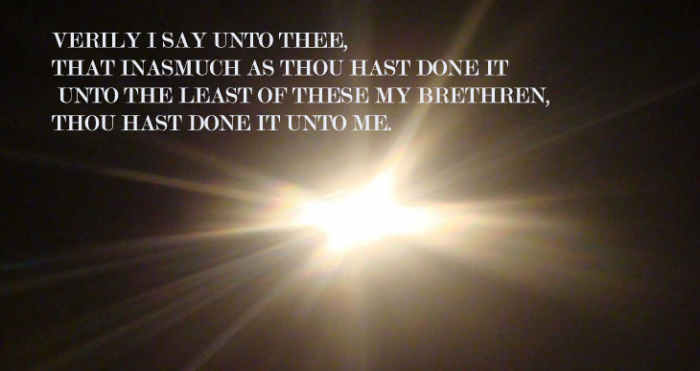
The sweet voice came again, “Verily I say unto thee, that inasmuch as thou hast done it unto the least of these my brethren, thou hast done it unto me.”
A calm radiance of wonder and joy lighted the face of Artaban as one long, last breath exhaled gently from his lips. His journey was ended. His treasure accepted. The Other Wise Man had found the King.

第四个博士的故事 (简译)
传说中,东方有四位天文学博士,有一夜不约而同看到一颗星,他们相信这颗星是救世君王降生的记号,所以约定在某月、某日在波斯的神殿前集合,然后往犹大地的耶路撒冷去。故事的主角名叫阿特班,他是四位博士当中的一位,他预备三颗宝石(蓝宝石、红宝石、珍珠)要去朝拜新生王。
就在四位博士相约的那天,阿特班带着礼物从家中出发,在路途中看到一位受伤、流血的老人躺在路旁,没有人救他。就将他带到旅馆,为了付旅馆费用及医药费用,他将「蓝宝石」给旅馆的老板。老人为了报恩,告诉阿特班:他是犹太人,照先知的预言,救世主要降生于伯利恒。为要拯救受伤的老人,他耽误了一天的时间,因此到达约定的地点时,另外三位博士已经出发了,所以他就直接去伯利恒。
当他赶到伯利恒时,四处打听三位博士的下落,有一个妇人告诉他,三位博士已经回去了。大希律王发现被博士所骗而大发雷霆,并且因着他对新生王的嫉妒和怨恨,所以命令兵丁将伯利恒城两岁以下的男婴都杀死。那个妇人向阿特班求救,因为她家中有一个男婴,恐怕会被兵丁杀死。当兵丁搜查到她的家时,阿特班给队长一颗「红宝石」请他不要进去搜查,因而救了那家的男婴。后来,阿特班听说那位新生王被父母带往埃及,于是他也去了埃及,四处寻找那位新生王,却没有找到。
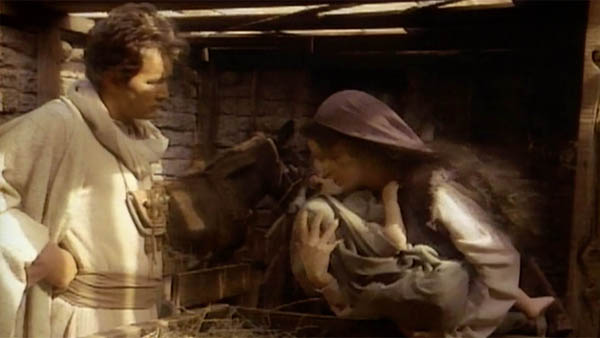
阿特班在埃及飘流了卅多年,帮助了许多需要帮助的人,后来又回到耶路撒冷。在那里他听到有一个被称为「犹太人的王」的人,受审判定罪,要被钉十字架。据说,他是一位有智慧、有爱心的先知,曾帮助过许多穷人、生病的人、罪人,也有人说他就是弥赛亚「救世主耶稣基督」。阿特班急着想去见他一面,想要将最后一颗宝物–珍珠献给他。
在前往的路途中遇到一个女孩子向他跑来,躲在他的背后,哀求他说:「爷爷啊,求你救我…」然后有一个男人,拿着皮鞭追赶来,喊叫:「给我出来,今日我要杀妳…」原来那个女孩子是那个男人的奴隶,在当时主人是有权可以杀自己的奴隶。阿特班为要阻止那个人,就向他说:「这儿有一颗珍珠,我可以用来赎她吗?」那个人说:「好,就将她卖给你」,于是阿特班就释放她自由。
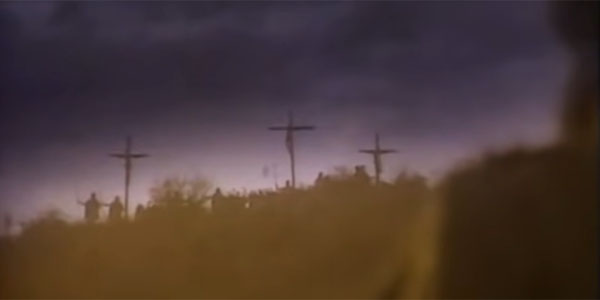
忽然,一阵大风吹来,地大震动,阿特班远远看见被钉在十字架上的耶稣,他流着眼泪跪下来向主耶稣说:「主啊!我已经没有甚么礼物可献给祢了。」就在这时,他听到主耶稣安慰他的声音:「儿子啊,我已经收到你的礼物了。」阿特班问:「主阿,祢甚么时候收到我的礼物呢?」主耶稣说:「我实在告诉你们,这些事你们既做在我这弟兄中一个最小的身上,就是做在我身上了。」(太25:40)
耶稣说:
因为我饿了,你们给我吃,渴了,你们给我喝;我作客旅,你们留我住;
我赤身露体,你们给我穿;我病了,你们看顾我;我在监里,你们来看我。
我实在告诉你们,这些事你们既做在我这弟兄中一个最小的身上,就是做在我身上了。(太25: 35/36/40)