By Max Lucado
A few years back, our family spent the Fourth of July at a nearby lake. The weekend was full of fireworks, hot dogs, and hot sun. But the memory-maker of the three days was the parasail ride. You’ve seen the sight: tethered to a high-speed boat, the parasail lifts the rope-clinging customer four hundred, or for an extra ten dollars, six hundred feet into the air.
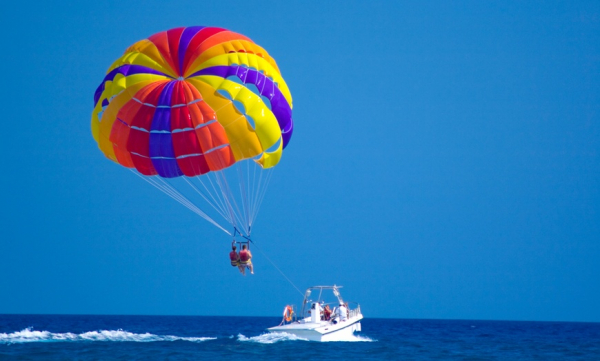
Speeding around the lake, high above the clamor below, the passenger hangs on and enjoys the view, letting the boat do the work. What choice does he or she have? To reach such heights, help is needed. To maintain such heights, power is mandated. No person can self-elevate to such a level.
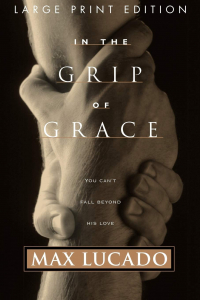 Such is a central theme of the New Testament. We cannot save ourselves, nor can we keep ourselves saved. Such is the work of God’s grace. And such is the theme of this book [In the Grip of Grace]. Gratefully, God has used it over the last few years to speak to many. I just received a letter from a Christian friend who went to visit his dying brother in Europe. The two had been unable to connect on a spiritual level. My friend mailed his brother a copy of In the Grip of Grace. By the time he arrived at his brother’s bedside, death was at the door. But this book was on the bedside. The dying man gestured to it and told his brother, “Now I get it.” And smiled.
Oh, the great grace of God. Watching as one of my daughters flew high above on the parasail, I thought, Isn’t this a picture of grace? Look at her, soaring and sitting. Those two words seldom appear in the same sentence. Especially religious sentences. We tend to think soaring and working, soaring and striving, soaring and struggling. But soaring and sitting?
It happens. It happens when you let the boat do the work. It happens when you let God do the same.
It happens when you live in the grip of grace.

Originally published in the preface, In the Grip of Grace, copyright 1996, 2021, Max Lucado.