
Entries by

Does God Make You Sick?

Hi GAMErs,

Today’s passage is Job 30:16-31.  Let’s go! 

Job 30:16-19 (NIV) 
16  “And now my life ebbs away; days of suffering grip me. 
17  Night pierces my bones; my gnawing pains never rest. 
18  In his great power [God] becomes like clothing to me; he binds me like the neck of my garment. 
19  He throws me into the mud, and I am reduced to dust and ashes.

On verses 16-31:  Here Job complains about the significant physical pain he is in due to a disease he has contracted.  Some scholars believe this disease may have been a skin condition like pemphigus foliaceus.  According to the Bible Knowledge Commentary:

“[t]his disease, as attested by physicians today, matches the symptoms of Job’s afflictions—inflamed, ulcerous sores (Job 2:7), itching (v. 8), degenerative changes in facial skin
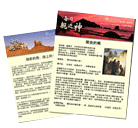
希律堡和齐波里

约翰福音14:30 这世界的王将到;他在我里面是毫无所有。

圣经信仰所建立的权威,是因其信息和内容都建立于曾经真实发生过的事件之上。圣经里所记载的历史和背景也都有蹟可循。旧约学者布鲁格曼(Walter Brueggemann)说::「在旧约当中,从没有『无时间的空间』,也没有『无空间的时间』,只有『蕴藏故事的地方』(storied place),也就是说,一个地方之所以含意义,是因为发生在那里的历史。」

即使新约比较注重属灵的教导,也还是要以实地为本,去明白事件或教导的源头,以期更明白主的教导和神的心意。因此认识耶稣到过的地方可以帮助信徒更明白,所有耶稣的教导都不是空谈。

今天要来看两个耶稣没有去过的地方,却与基督教信仰有极深的关系。第一个是希律堡。希律堡建于主前23-20年,是大希律耗资最庞大的建筑项目,亦是他所兴建的所有项目中,唯一以自己名字命名的地方。

Watch Out for Mockers

Hi GAMErs,

Today’s passage is Job 30:1-15.  Let’s go! 

On verses 1-15:  Job has gone from being someone whom others held in high esteem (see Job 29) to one whom others mock.  When Job looks at the people mocking him, he notices that they are men much younger than him, whose fathers were deadbeats whom he would never have associated with (v1-8), “a base and nameless brood” (v8).  The ones mocking Job mock him in song (v9) and spit in his face (v10) without any kind of restraint (v11).  Job describes his mockers in military terms, how they are like an army that besieges him (v12), leaving him without any road to exit or escape (“break up my road” – v13).  They advance against Job like an army attacking a city, the walls of which are already torn down with gaping holes (v14).  As a result, Job lives in terror, feeling unsafe and humiliated (v15).

耶稣在伯利恒

约翰福音6:35耶稣说:「我就是生命的粮。到我这里来的,必定不饿;信我的,永远不渴。」

耶稣在伯利恒出生,为了躲避希律王追杀,跟父母逃到埃及;希律王死后,他们一家回到拿撒勒。之后,耶稣一生都在以色列国度过。 四福音书告诉我们,耶稣在祂生命的每个阶段都位于一个特定的位置,这些地点不是随机发生的,是出于神的命定和耶稣的选择。 这些地点都有希伯来文的名字,或许可以借着它们的名字,让我们对圣子的一生及其代表的意义有更深的理解。

伯利恒

耶稣降生在伯利恒,符合了先知弥迦的预言:「伯利恒以法他啊,你在犹大诸城中为小,将来必有一位从你那里出来,在以色列中为我做掌权的。祂的根源从亘古,从太初就有。(弥5:2)」以色列最伟大的君王大卫,也是在伯利恒出生。弥赛亚,以色列的救主和救世主也在这里出生,是再合适不过了。

若不是神激动该撒亚古士督要天下人民去注册,约瑟和玛利亚是绝对不会选在婴儿快要出生时远行的。神的旨意越人的意念,借着环境,神就完成了祂的定意。为了要让人明白这个婴儿的出生对世人之重要。

伯利恒的希伯来名是Beyt-lechem (בית לחם) means “house of bread” in Hebrew。在希伯来文的意思是:面包之屋。耶稣曾在这里用五饼二鱼喂饱了五千人(可6:44),并在〈约翰福音〉里宣称:「我就是生命的粮。到我这里来的,必定不饿;信我的,永远不渴。」

Don’t Worship the Past

Hi GAMErs,

Today’s passage is Job 29:1-25.  Let’s go! 

Job 29:2-6 (NIV) 
2  “How I long for the months gone by, for the days when God watched over me, 
3  when his lamp shone upon my head and by his light I walked through darkness! 
4  Oh, for the days when I was in my prime, when God’s intimate friendship blessed my house, 
5  when the Almighty was still with me and my children were around me, 
6  when my path was drenched with cream and the rock poured out for me streams of olive oil.
 
On verses 1-25:  Here Job longs achingly for the years that preceded all the loss and pain he experienced.  Those were the days when he felt God’s illuminating light and intimate friendship (v2-4), when his children were still with him and life was sweet (v5-6), when he had great status in the eyes of people (v7-11), when he helped the weak and poor (v12-17), when he was filled with confidence and hope about his future (v18-20), when people valued his counsel (v21-24), and when he enjoyed great power but was gentle in his exercise of it (v25).

世界的最初 Bereshit Olam

今天要给大家介绍一首非常浪漫的情歌—从神来的情歌

「我必聘你永远归我为妻,以仁义、公平、慈爱、怜悯聘你归我;也以诚实*聘你归我,你就必认识我─耶和华。」(何 2:19-20)

一开始的美好,总是最让人怀念的。

分享一首超级浪漫的希伯来文流行歌–

《世界的最初 Bereshit Olam》 (附歌词),真的觉得很美~

这是一首很有爱、又很有诗意的歌,

其实这首歌第一次听的时候,就是想到以色列是神的妻子,

花了多少代价,神却没有改变对她的爱
…………………………..请点入听歌……………………..

There, in the beginning,    在那里,一开始,

Eve stood, lovingly, opposite Adam   夏娃带着爱,站在亚当对面

A helper opposite him, bone from his bone   他的帮手,骨中的骨

Then walks Adam    然后亚当走向

Towards she about whom he dreamed   他梦寐以求的人

On the head of his happiness, he will raise you up with him

在他幸福之最,他会让你与他同等

And he will not forget you, his beloved 他不会忘记她,他的爱人

Where You’ll Find Wisdom

Hi GAMErs,

Today’s passage is Job 28:1-28.  Let’s go!

Job 28:1-11 (NIV) 
1  “There is a mine for silver and a place where gold is refined.
2  Iron is taken from the earth, and copper is smelted from ore.
3  Man puts an end to the darkness; he searches the farthest recesses for ore in the blackest darkness.
4  Far from where people dwell he cuts a shaft, in places forgotten by the foot of man; far from men he dangles and sways.
5  The earth, from which food comes, is transformed below as by fire;
6  sapphires come from its rocks, and its dust contains nuggets of gold.
7  No bird of prey knows that hidden path, no falcon’s eye has seen it.
8  Proud beasts do not set foot on it, and no lion prowls there.
9  Man’s hand assaults the flinty rock and lays bare the roots of the mountains.
10  He tunnels through the rock; his eyes see all its treasures.
11  He searches the sources of the rivers and brings hidden things to light.

On verses 1-11:  Why does Job speak at length about how people mine for silver and gold?  It’s because Job is comparing getting wisdom to mining for precious metals.  In both cases the treasure is hidden beneath the surface, requires an intentional and difficult search to find, is hard to reach (v4), and cannot be perceived by bird or beast (v7-8, 20-21).

4 Consequences of Being Money Obsessed

Hi GAMErs,

Today’s passage is Job 27:13-23.  Let’s go!

Job 27:13-23 (NIV) 
13  “Here is the fate God allots to the wicked, the heritage a ruthless man receives from the Almighty:
14  However many his children, their fate is the sword; his offspring will never have enough to eat.
15  The plague will bury those who survive him, and their widows will not weep for them.
16  Though he heaps up silver like dust and clothes like piles of clay,
17  what he lays up the righteous will wear, and the innocent will divide his silver………

On verse 13:  Here Job begins to describe what happens to the person who spends their life chasing wealth but who does not trust or obey God’s commands.  In the verses that follow Job will describe four consequences that happen to those whose number one obsession is getting rich.

Ahava 爱的真义

雅歌1:4   我们必因你欢喜快乐,我们要称赞你的爱情,胜似称赞美酒。

“We rejoice and delight in you; we will praise your love more than wine.”  (Song of Songs 1:4)

情人节的活动起源于,对一位在罗马殉道的天主教神父华伦泰(Valentine)的记念,因为当时的罗马皇帝禁止男人结婚,要他们专心当兵;但是华伦泰无视禁令,仍然为年轻人举行婚礼,后来在公元269年2月14日被斩首。

就像大多数的假期一样,记念华伦泰的活动变成了商人谋财的契机,妨间的卡片、鲜花和巧克力大行其道。但是真正的爱远远王止于糖果或鲜花,因此今天我们要通过这个古老的希伯来文Ahava来理解神对‘爱’的教导。

希伯来语中的爱这个词-ahava(אהבה),由三个基本的希伯来字母组成:aleph(א),hey(ה)和vet(ב)。

从a-hav-a的这三个根字母中,我们得到根词hav(הב),hav表示给予。这字根包含了一个真理,付出便是爱的根本,也就是爱的基础。夫妻之间的爱情是互相给予的, 我们对伴侣的投入越多,联系就越牢固,爱就越深。

在起初

创世记1:1  起初,神创造天地。

今天开始我们暂停一下系列性的查经灵修,改为每日一句的灵修,假如我们每天可以记住一句经文,一年就可以记住365句了。我们会参考《以色列圣经学院》的经文解释,从希伯来文的背景去理解神的话。

在希伯来文的‘起初Beresheet’, 有一个隐藏的意思在其中。

英文《圣经》一般都把它译为In The Beginning (在起初),这并不十分正确,在希伯来原文里,这个字更加有意思。《圣经》里的第一个希伯来文是beresheet,  意思是“at the heading”,在头之处。

头指的不只是身体的最上面,并且是全身最有智慧,人类身份的核心。

《圣经》给人类的信息是:神创造天地是一个智慧的,有计划去做的过程,而不是一个随机发生的错误。因此阅读《圣经》绝不应仅仅是阅读行为, 而必须是一种智力活动。 为了使《圣经》深入人心,我们都需要动脑筋。

当我们如此开始读神的话语时,我们就会明白,相信耶和华神绝对不是迷信,而是一个相当科学和理智的过程。虽然有很多事情我们暂时不能明白,也因而让我们认识到人的智慧有限,应当把信心放在那位无所不能的神身上,让祂成为我们的头,让祂的智慧也启发我们跟随祂的决心。