Jona / translated by Maggie Tsui
In 1952, in an aboriginal tribal village called Quri in Hsinchu, Taiwan, an Atayal woman gave birth to a baby without ears. Heartbroken, she wrapped the baby with linen and tossed him down to the valley. She hoped to end his young, unfortunate life early, for she did not want her son to endure the pain of being ridiculed when he grew up. Moreover, she worried that his disability would hinder his livelihood in the already poverty-stricken village. After two days, she went to retrieve his body, but was shocked to discover that the baby was still alive. After learning about the story, the woman’s father, a Christian, encouraged her to do her best to raise the baby.
1952年,在台湾新竹县的石磊部落里,有一位泰雅族的女人分娩后,看见她的婴儿竟然没有耳朵,伤心之余,想到他以后要忍受被人嘲笑的痛苦,又担心残疾人难以在穷困的部落里生活,于是偷偷用布把婴儿包起来,丢到山下,希望早一点结束他不幸的一生。两天之后,这个女人想去帮婴儿收尸,却惊讶地发现,婴儿还活着。女人的父亲知道这事后,因着他的基督教信仰,他鼓励女儿好好把这孩子养大。

The baby was named Cheng-Lu Hsu (“Cheng-Lu” means the way of righteousness). He grew up bearing the mockery from his tribal people. Although he could not hear them, he could see their scoffing faces. Since he could not express his anger, he became quite irritable and sensitive. Whenever he saw somebody staring at him, he would beat them up because he thought they were laughing at him. He was also an alcoholic, squandering his life and becoming the headache of his village.
这婴儿后来被取名为“徐正路”。由于天生聋哑,他自幼在族人的嘲笑中长大,虽然听不到声音,但看得到人家脸上的表情;也由于无法表达心里的愤怒,他的性情变得非常暴燥易怒,而且相当敏感。只要发现有人在看他,他就觉得人家在嘲笑他,他就会打人;又喜欢酗酒,天天过著醉生梦死的生活,成为部落里的头痛人物。
His family hoped that Christian principles could help him, but he often snuck away from church meetings. Sometimes, when the offering bag was passed before him, he would steal the money and treat his friends to a big feast. One day when he was 17 years old, he again tried to sneak away from a special meeting at church. This time, his mother had gotten six big guys to block his way outside. Then suddenly, he turned back and walked straight toward the pulpit. He said, “I felt that there was a power pushing me forward to the pulpit. I wanted to resist but was powerless to do so.” He thought the power was from the six men, but later discovered that there was nobody behind him.
 家人希望他能从基督的信仰里得到帮助,他却经常偷偷从聚会中溜走,有时奉献袋传到他面前,他就把手伸进去,偷袋里的钱,拿去请朋友大吃大喝。在他十七岁那一年,有一次教会举办特会。他又想溜走,没想到母亲请了六个大男生看守着他,不给他出教会的门。突然之间,他回头往讲台方向走,他说:““我感觉有一股力量推着我往布道台前进,我想掉头而走却使不上力。”他以为是那六个男生推他,后来却发现身后根本没人。
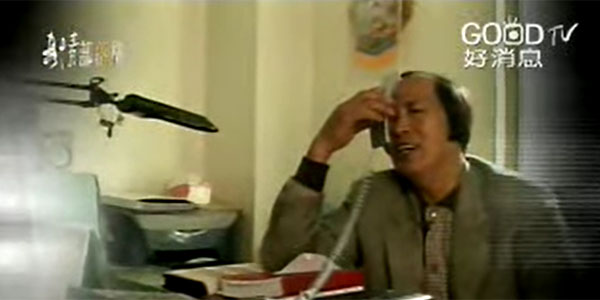
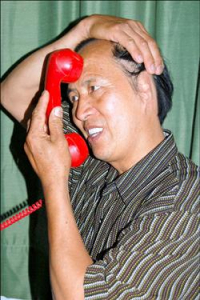
As he approached the pulpit he heard a voice, “Ta-Lu, Ta-Lu, I am Jesus! You are my beloved child! Repent!” (Ta-Lu is his infant name.) Before this, he could not hear, but when he heard this voice, he involuntarily knelt down and proclaimed, “Thank God!” The congregation did not hear God’s voice, but saw him full of sweat, cry out loudly, and spit out loads of filth on the ground. After this, he could hear and speak. Later, he discovered that God put ears in his forehead! So when he talks on the phone, he places the phone on his forehead.
当他到了讲坛前面时,听到一个声音说:“达路!达路!我是耶稣!你是我心爱的孩子!你要悔改!”(达路是他的乳名)。在这之前,他什么也听不见,可是一听到这声音,他不由自主地跪下,大声说出:“感谢上帝!”在场的人却没有听到声音,只见他满头汗水,叫了一声之后,突然吐了一地脏东西。从此之后,他就能听能说。但是他后来发现,神把“耳朵”放在他的额头内,所以他听电话,要把听筒放到额头。
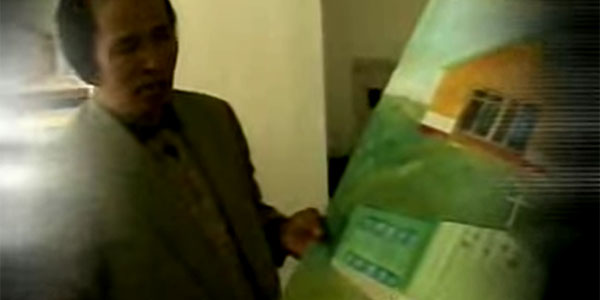
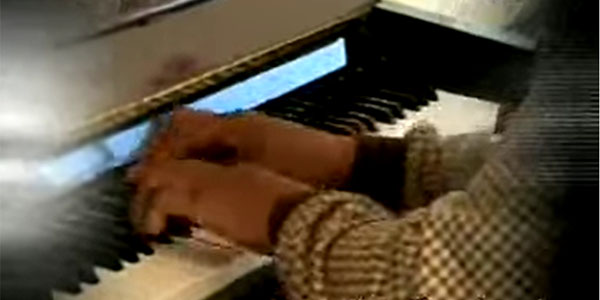
Without being taught, he has learned to play all sorts of musical instruments, and even has written his own compositions. He had only finished grade school, but he was able to draw the new church’s blueprints overnight. Doctors from Japan had tested his severely-underdeveloped ears and found no auditory response; they concluded that it is a miracle that he can hear. Cheng-Lu Hsu is now an elder at a local church, and makes his living by growing organic produce. When he has time, he tells others the miraculous work God has done in him, so that people can come to know this Great God.
在无师自通的情况下,他学会了各种乐器,歌曲创作;只有小学毕业,却在一夜之间画好建新教会的蓝图。日本医界曾经以科学仪器验证他的如鼠小耳没有听觉反应,而被认为他能听见是一项神蹟。这位徐正路已成为当地教会的长老,目前种植有机蔬菜为生,有时间时就到处传扬神在他身上的作为,为让人认识这位伟大的神。(Jona)